•  

Japan: Heavy Snow Paralyzes Aomori as Record Accumulation Piles Up

A series of strong cold air masses brought heavy snowfall to northern Japan from January 21 through February 2. According to authorities, a total of 30 people have died across the region since January 20 due to snow-related incidents. In Aomori City, numerous vehicles were left stranded by the snow, causing traffic congestion in many areas. Snow accumulation reached 178 centimeters on February 2—about 2.6 times the seasonal average—prompting the closure of all public elementary and junior high schools in the city.

  •  

Japan: Record January Snowfall Hits Aomori, Disrupting Traffic and Trains

On January 28, Aomori City recorded 150 centimeters of snowfall for the first time in 40 years, causing traffic congestion across the city and a series of train service suspensions. Snow depth reached 154 centimeters by 9 p.m., tying for the second-highest January total on record, last seen on January 30, 1986. According to Aomori Prefecture, as of 2 p.m. on January 29, two people had died and 85 others were injured, while damage was confirmed at four residential properties. The video captures conditions in Aomori City on the morning of January 29, showing the extent of the heavy snowfall.

  •  

Canada: Lake-Effect Snow Prompts Snow Squall Warning in Southern Ontario

A powerful snow squall warning is in effect across Ontario as a high-impact event moves in on Thursday, November 27. Environment Canada expects dangerous conditions, treacherous roads, near-zero visibility, and 30 to 50 centimeters of snow through Saturday, November 29.

  •  

Spain: First Snowfall in 11 Northern and Central Mountainous Regions 3

The arrival of a mass of Arctic air, associated with Storm Claudia, has triggered the first serious winter episode in the north of the Iberian Peninsula on Thursday, November 20, bringing snowfall to unusually low altitudes for November and sub-zero temperatures inland. Official warnings cover much of the northern third of Spain. Specifically, the Picos de Europa region is under an orange alert until 6 a.m. Friday, November 21, where snowfall is expected to reach 30 centimeters in 24 hours at altitudes above 900 meters.

  •  

Spain: First Snowfall in 11 Northern and Central Mountainous Regions 2

The arrival of a mass of Arctic air, associated with Storm Claudia, has triggered the first serious winter episode in the north of the Iberian Peninsula on Thursday, November 20, bringing snowfall to unusually low altitudes for November and sub-zero temperatures inland. Official warnings cover much of the northern third of Spain. Specifically, the Picos de Europa region is under an orange alert until 6 a.m. Friday, November 21, where snowfall is expected to reach 30 centimeters in 24 hours at altitudes above 900 meters.

  •  

Spain: First Snowfall in 11 Northern and Central Mountainous Regions

The arrival of a mass of Arctic air, associated with Storm Claudia, has triggered the first serious winter episode in the north of the Iberian Peninsula on Thursday, November 20, bringing snowfall to unusually low altitudes for November and sub-zero temperatures inland. Official warnings cover much of the northern third of Spain. Specifically, the Picos de Europa region is under an orange alert until 6 a.m. Friday, November 21, where snowfall is expected to reach 30 centimeters in 24 hours at altitudes above 900 meters.

  •  
Chinese Experience in Desert Controi

Chinese Experience in Desert Controi

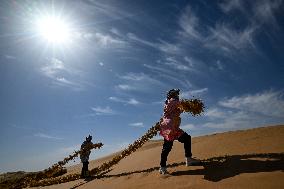
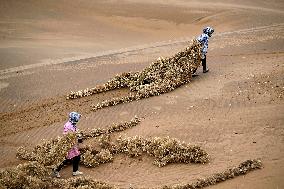
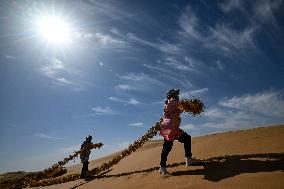
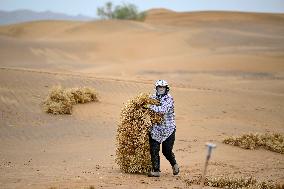
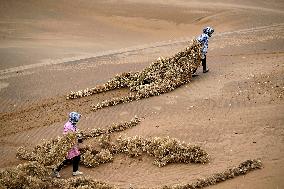
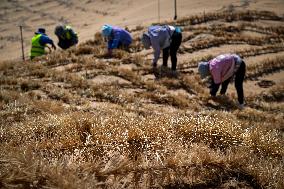
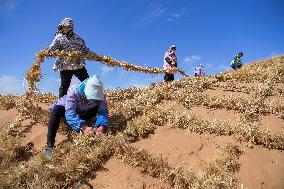
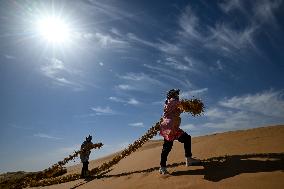
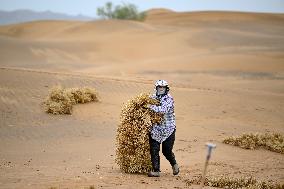
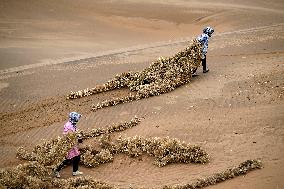
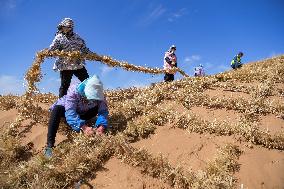
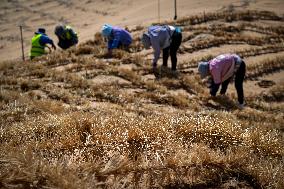
Workers pave straw checkerboards in the Tengger Desert, in Zhongwei of northwest China's Ningxia Hui Autonomous Region, May 30, 2024. In the 1950s, to protect China's first railway that runs through a desert, the city of Zhongwei embarked on a journey of desert mitigation. Scientists at the Shapotou Desert Research and Experiment Station, part of the Northwest Institute of Eco-Environment and Resources of the Chinese Academy of Sciences, along with local residents, developed straw checkerboards to stabilize the sand and prevent dunes from shifting. Tang Ximing, a senior engineer at a state-owned forestry farm in Zhongwei, crafted a steel tool that differs from regular shovels by featuring two horizontal bars at the front tip. This innovative tool enables the planting of seedling roots 50 centimeters deep into the moist sand layer. This simple tool increases the survival rate of afforestation by 25 percent to over 85 percent. It has been widely promoted and used in afforestation projects across other regions i

  •  
Chinese Experience in Desert Controi

Chinese Experience in Desert Controi

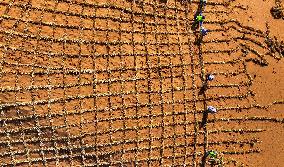
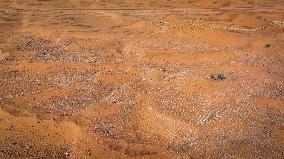
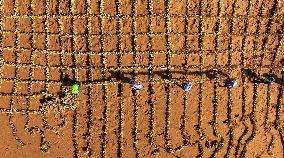
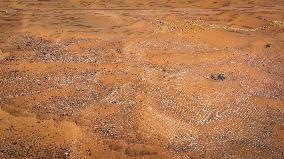
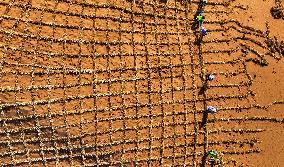
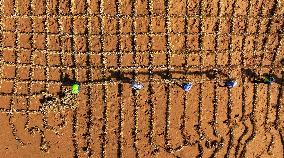
An aerial drone photo taken on May 30, 2024 shows workers paving straw checkerboards in the Tengger Desert, in Zhongwei of northwest China's Ningxia Hui Autonomous Region. In the 1950s, to protect China's first railway that runs through a desert, the city of Zhongwei embarked on a journey of desert mitigation. Scientists at the Shapotou Desert Research and Experiment Station, part of the Northwest Institute of Eco-Environment and Resources of the Chinese Academy of Sciences, along with local residents, developed straw checkerboards to stabilize the sand and prevent dunes from shifting. Tang Ximing, a senior engineer at a state-owned forestry farm in Zhongwei, crafted a steel tool that differs from regular shovels by featuring two horizontal bars at the front tip. This innovative tool enables the planting of seedling roots 50 centimeters deep into the moist sand layer. This simple tool increases the survival rate of afforestation by 25 percent to over 85 percent. It has been widely promoted and used in affores

  •  
Chinese Experience in Desert Controi

Chinese Experience in Desert Controi

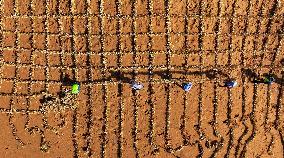
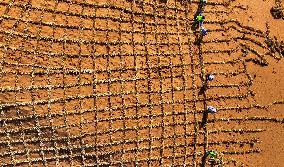
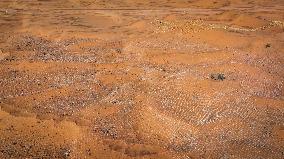
An aerial drone photo taken on May 30, 2024 shows workers paving straw checkerboards in the Tengger Desert, in Zhongwei of northwest China's Ningxia Hui Autonomous Region. In the 1950s, to protect China's first railway that runs through a desert, the city of Zhongwei embarked on a journey of desert mitigation. Scientists at the Shapotou Desert Research and Experiment Station, part of the Northwest Institute of Eco-Environment and Resources of the Chinese Academy of Sciences, along with local residents, developed straw checkerboards to stabilize the sand and prevent dunes from shifting. Tang Ximing, a senior engineer at a state-owned forestry farm in Zhongwei, crafted a steel tool that differs from regular shovels by featuring two horizontal bars at the front tip. This innovative tool enables the planting of seedling roots 50 centimeters deep into the moist sand layer. This simple tool increases the survival rate of afforestation by 25 percent to over 85 percent. It has been widely promoted and used in affores

  •  
Chinese Experience in Desert Controi

Chinese Experience in Desert Controi

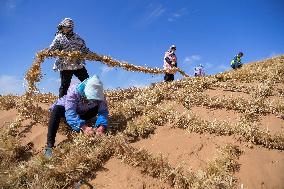
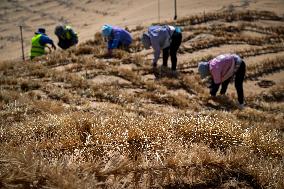
Workers pave straw checkerboards in the Tengger Desert, in Zhongwei of northwest China's Ningxia Hui Autonomous Region, May 30, 2024. In the 1950s, to protect China's first railway that runs through a desert, the city of Zhongwei embarked on a journey of desert mitigation. Scientists at the Shapotou Desert Research and Experiment Station, part of the Northwest Institute of Eco-Environment and Resources of the Chinese Academy of Sciences, along with local residents, developed straw checkerboards to stabilize the sand and prevent dunes from shifting. Tang Ximing, a senior engineer at a state-owned forestry farm in Zhongwei, crafted a steel tool that differs from regular shovels by featuring two horizontal bars at the front tip. This innovative tool enables the planting of seedling roots 50 centimeters deep into the moist sand layer. This simple tool increases the survival rate of afforestation by 25 percent to over 85 percent. It has been widely promoted and used in afforestation projects across other regions i

  •  
Chinese Experience in Desert Controi

Chinese Experience in Desert Controi

Workers carry straw checkerboards in the Tengger Desert, in Zhongwei of northwest China's Ningxia Hui Autonomous Region, May 30, 2024. In the 1950s, to protect China's first railway that runs through a desert, the city of Zhongwei embarked on a journey of desert mitigation. Scientists at the Shapotou Desert Research and Experiment Station, part of the Northwest Institute of Eco-Environment and Resources of the Chinese Academy of Sciences, along with local residents, developed straw checkerboards to stabilize the sand and prevent dunes from shifting. Tang Ximing, a senior engineer at a state-owned forestry farm in Zhongwei, crafted a steel tool that differs from regular shovels by featuring two horizontal bars at the front tip. This innovative tool enables the planting of seedling roots 50 centimeters deep into the moist sand layer. This simple tool increases the survival rate of afforestation by 25 percent to over 85 percent. It has been widely promoted and used in afforestation projects across other regions

  •  
Chinese Experience in Desert Controi

Chinese Experience in Desert Controi

An aerial drone photo taken on May 30, 2024 shows workers paving straw checkerboards in the Tengger Desert, in Zhongwei of northwest China's Ningxia Hui Autonomous Region. In the 1950s, to protect China's first railway that runs through a desert, the city of Zhongwei embarked on a journey of desert mitigation. Scientists at the Shapotou Desert Research and Experiment Station, part of the Northwest Institute of Eco-Environment and Resources of the Chinese Academy of Sciences, along with local residents, developed straw checkerboards to stabilize the sand and prevent dunes from shifting. Tang Ximing, a senior engineer at a state-owned forestry farm in Zhongwei, crafted a steel tool that differs from regular shovels by featuring two horizontal bars at the front tip. This innovative tool enables the planting of seedling roots 50 centimeters deep into the moist sand layer. This simple tool increases the survival rate of afforestation by 25 percent to over 85 percent. It has been widely promoted and used in affores

  •  
Chinese Experience in Desert Controi

Chinese Experience in Desert Controi

Workers pave straw checkerboards in the Tengger Desert, in Zhongwei of northwest China's Ningxia Hui Autonomous Region, May 30, 2024. In the 1950s, to protect China's first railway that runs through a desert, the city of Zhongwei embarked on a journey of desert mitigation. Scientists at the Shapotou Desert Research and Experiment Station, part of the Northwest Institute of Eco-Environment and Resources of the Chinese Academy of Sciences, along with local residents, developed straw checkerboards to stabilize the sand and prevent dunes from shifting. Tang Ximing, a senior engineer at a state-owned forestry farm in Zhongwei, crafted a steel tool that differs from regular shovels by featuring two horizontal bars at the front tip. This innovative tool enables the planting of seedling roots 50 centimeters deep into the moist sand layer. This simple tool increases the survival rate of afforestation by 25 percent to over 85 percent. It has been widely promoted and used in afforestation projects across other regions i

  •  
(VistaNingxia)CHINA-NINGXIA-ZHONGWEI-ENVIRONMENT-SAND CONTROL (CN)

(VistaNingxia)CHINA-NINGXIA-ZHONGWEI-ENVIRONMENT-SAND CONTROL (CN)

(240616) -- ZHONGWEI, June 16, 2024 Photo by Xinhua/ABACAPRESS.COM) -- An aerial drone photo taken on May 30, 2024 shows workers paving straw checkerboards in the Tengger Desert, in Zhongwei of northwest China's Ningxia Hui Autonomous Region. In the 1950s, to protect China's first railway that runs through a desert, the city of Zhongwei embarked on a journey of desert mitigation. Scientists at the Shapotou Desert Research and Experiment Station, part of the Northwest Institute of Eco-Environment and Resources of the Chinese Academy of Sciences, along with local residents, developed straw checkerboards to stabilize the sand and prevent dunes from shifting. Tang Ximing, a senior engineer at a state-owned forestry farm in Zhongwei, crafted a steel tool that differs from regular shovels by featuring two horizontal bars at the front tip. This innovative tool enables the planting of seedling roots 50 centimeters deep into the moist sand layer. This simple tool increases the survival rate of afforestation by 25 perc

  •  
(VistaNingxia)CHINA-NINGXIA-ZHONGWEI-ENVIRONMENT-SAND CONTROL (CN)

(VistaNingxia)CHINA-NINGXIA-ZHONGWEI-ENVIRONMENT-SAND CONTROL (CN)

(240616) -- ZHONGWEI, June 16, 2024 Photo by Xinhua/ABACAPRESS.COM) -- Workers pave straw checkerboards in the Tengger Desert, in Zhongwei of northwest China's Ningxia Hui Autonomous Region, May 30, 2024. In the 1950s, to protect China's first railway that runs through a desert, the city of Zhongwei embarked on a journey of desert mitigation. Scientists at the Shapotou Desert Research and Experiment Station, part of the Northwest Institute of Eco-Environment and Resources of the Chinese Academy of Sciences, along with local residents, developed straw checkerboards to stabilize the sand and prevent dunes from shifting. Tang Ximing, a senior engineer at a state-owned forestry farm in Zhongwei, crafted a steel tool that differs from regular shovels by featuring two horizontal bars at the front tip. This innovative tool enables the planting of seedling roots 50 centimeters deep into the moist sand layer. This simple tool increases the survival rate of afforestation by 25 percent to over 85 percent. It has been wi

  •  
(VistaNingxia)CHINA-NINGXIA-ZHONGWEI-ENVIRONMENT-SAND CONTROL (CN)

(VistaNingxia)CHINA-NINGXIA-ZHONGWEI-ENVIRONMENT-SAND CONTROL (CN)

(240616) -- ZHONGWEI, June 16, 2024 Photo by Xinhua/ABACAPRESS.COM) -- A worker paves straw checkerboards in the Tengger Desert, in Zhongwei of northwest China's Ningxia Hui Autonomous Region, May 30, 2024. In the 1950s, to protect China's first railway that runs through a desert, the city of Zhongwei embarked on a journey of desert mitigation. Scientists at the Shapotou Desert Research and Experiment Station, part of the Northwest Institute of Eco-Environment and Resources of the Chinese Academy of Sciences, along with local residents, developed straw checkerboards to stabilize the sand and prevent dunes from shifting. Tang Ximing, a senior engineer at a state-owned forestry farm in Zhongwei, crafted a steel tool that differs from regular shovels by featuring two horizontal bars at the front tip. This innovative tool enables the planting of seedling roots 50 centimeters deep into the moist sand layer. This simple tool increases the survival rate of afforestation by 25 percent to over 85 percent. It has been

  •  
(VistaNingxia)CHINA-NINGXIA-ZHONGWEI-ENVIRONMENT-SAND CONTROL (CN)

(VistaNingxia)CHINA-NINGXIA-ZHONGWEI-ENVIRONMENT-SAND CONTROL (CN)

(240616) -- ZHONGWEI, June 16, 2024 Photo by Xinhua/ABACAPRESS.COM) -- An aerial drone photo taken on May 30, 2024 shows workers paving straw checkerboards in the Tengger Desert, in Zhongwei of northwest China's Ningxia Hui Autonomous Region. In the 1950s, to protect China's first railway that runs through a desert, the city of Zhongwei embarked on a journey of desert mitigation. Scientists at the Shapotou Desert Research and Experiment Station, part of the Northwest Institute of Eco-Environment and Resources of the Chinese Academy of Sciences, along with local residents, developed straw checkerboards to stabilize the sand and prevent dunes from shifting. Tang Ximing, a senior engineer at a state-owned forestry farm in Zhongwei, crafted a steel tool that differs from regular shovels by featuring two horizontal bars at the front tip. This innovative tool enables the planting of seedling roots 50 centimeters deep into the moist sand layer. This simple tool increases the survival rate of afforestation by 25 perc

  •  
(VistaNingxia)CHINA-NINGXIA-ZHONGWEI-ENVIRONMENT-SAND CONTROL (CN)

(VistaNingxia)CHINA-NINGXIA-ZHONGWEI-ENVIRONMENT-SAND CONTROL (CN)

(240616) -- ZHONGWEI, June 16, 2024 Photo by Xinhua/ABACAPRESS.COM) -- Workers carry straw checkerboards in the Tengger Desert, in Zhongwei of northwest China's Ningxia Hui Autonomous Region, May 30, 2024. In the 1950s, to protect China's first railway that runs through a desert, the city of Zhongwei embarked on a journey of desert mitigation. Scientists at the Shapotou Desert Research and Experiment Station, part of the Northwest Institute of Eco-Environment and Resources of the Chinese Academy of Sciences, along with local residents, developed straw checkerboards to stabilize the sand and prevent dunes from shifting. Tang Ximing, a senior engineer at a state-owned forestry farm in Zhongwei, crafted a steel tool that differs from regular shovels by featuring two horizontal bars at the front tip. This innovative tool enables the planting of seedling roots 50 centimeters deep into the moist sand layer. This simple tool increases the survival rate of afforestation by 25 percent to over 85 percent. It has been w

  •  
(VistaNingxia)CHINA-NINGXIA-ZHONGWEI-ENVIRONMENT-SAND CONTROL (CN)

(VistaNingxia)CHINA-NINGXIA-ZHONGWEI-ENVIRONMENT-SAND CONTROL (CN)

(240616) -- ZHONGWEI, June 16, 2024 Photo by Xinhua/ABACAPRESS.COM) -- Workers pave straw checkerboards in the Tengger Desert, in Zhongwei of northwest China's Ningxia Hui Autonomous Region, May 30, 2024. In the 1950s, to protect China's first railway that runs through a desert, the city of Zhongwei embarked on a journey of desert mitigation. Scientists at the Shapotou Desert Research and Experiment Station, part of the Northwest Institute of Eco-Environment and Resources of the Chinese Academy of Sciences, along with local residents, developed straw checkerboards to stabilize the sand and prevent dunes from shifting. Tang Ximing, a senior engineer at a state-owned forestry farm in Zhongwei, crafted a steel tool that differs from regular shovels by featuring two horizontal bars at the front tip. This innovative tool enables the planting of seedling roots 50 centimeters deep into the moist sand layer. This simple tool increases the survival rate of afforestation by 25 percent to over 85 percent. It has been wi

  •  
(VistaNingxia)CHINA-NINGXIA-ZHONGWEI-ENVIRONMENT-SAND CONTROL (CN)

(VistaNingxia)CHINA-NINGXIA-ZHONGWEI-ENVIRONMENT-SAND CONTROL (CN)

(240616) -- ZHONGWEI, June 16, 2024 Photo by Xinhua/ABACAPRESS.COM) -- Workers pave straw checkerboards in the Tengger Desert, in Zhongwei of northwest China's Ningxia Hui Autonomous Region, May 30, 2024. In the 1950s, to protect China's first railway that runs through a desert, the city of Zhongwei embarked on a journey of desert mitigation. Scientists at the Shapotou Desert Research and Experiment Station, part of the Northwest Institute of Eco-Environment and Resources of the Chinese Academy of Sciences, along with local residents, developed straw checkerboards to stabilize the sand and prevent dunes from shifting. Tang Ximing, a senior engineer at a state-owned forestry farm in Zhongwei, crafted a steel tool that differs from regular shovels by featuring two horizontal bars at the front tip. This innovative tool enables the planting of seedling roots 50 centimeters deep into the moist sand layer. This simple tool increases the survival rate of afforestation by 25 percent to over 85 percent. It has been wi

  •  
(VistaNingxia)CHINA-NINGXIA-ZHONGWEI-ENVIRONMENT-SAND CONTROL (CN)

(VistaNingxia)CHINA-NINGXIA-ZHONGWEI-ENVIRONMENT-SAND CONTROL (CN)

(240616) -- ZHONGWEI, June 16, 2024 Photo by Xinhua/ABACAPRESS.COM) -- An aerial drone photo taken on May 30, 2024 shows workers paving straw checkerboards in the Tengger Desert, in Zhongwei of northwest China's Ningxia Hui Autonomous Region. In the 1950s, to protect China's first railway that runs through a desert, the city of Zhongwei embarked on a journey of desert mitigation. Scientists at the Shapotou Desert Research and Experiment Station, part of the Northwest Institute of Eco-Environment and Resources of the Chinese Academy of Sciences, along with local residents, developed straw checkerboards to stabilize the sand and prevent dunes from shifting. Tang Ximing, a senior engineer at a state-owned forestry farm in Zhongwei, crafted a steel tool that differs from regular shovels by featuring two horizontal bars at the front tip. This innovative tool enables the planting of seedling roots 50 centimeters deep into the moist sand layer. This simple tool increases the survival rate of afforestation by 25 perc

  •  
(VistaNingxia)CHINA-NINGXIA-ZHONGWEI-ENVIRONMENT-SAND CONTROL (CN)

(VistaNingxia)CHINA-NINGXIA-ZHONGWEI-ENVIRONMENT-SAND CONTROL (CN)

(240616) -- ZHONGWEI, June 16, 2024 (Xinhua) -- An aerial drone photo taken on May 30, 2024 shows workers paving straw checkerboards in the Tengger Desert, in Zhongwei of northwest China's Ningxia Hui Autonomous Region. In the 1950s, to protect China's first railway that runs through a desert, the city of Zhongwei embarked on a journey of desert mitigation. Scientists at the Shapotou Desert Research and Experiment Station, part of the Northwest Institute of Eco-Environment and Resources of the Chinese Academy of Sciences, along with local residents, developed straw checkerboards to stabilize the sand and prevent dunes from shifting. Tang Ximing, a senior engineer at a state-owned forestry farm in Zhongwei, crafted a steel tool that differs from regular shovels by featuring two horizontal bars at the front tip. This innovative tool enables the planting of seedling roots 50 centimeters deep into the moist sand layer. This simple tool increases the survival rate of afforestation by 25 percent to over 85 perc

  •  
(VistaNingxia)CHINA-NINGXIA-ZHONGWEI-ENVIRONMENT-SAND CONTROL (CN)

(VistaNingxia)CHINA-NINGXIA-ZHONGWEI-ENVIRONMENT-SAND CONTROL (CN)

(240616) -- ZHONGWEI, June 16, 2024 (Xinhua) -- Workers pave straw checkerboards in the Tengger Desert, in Zhongwei of northwest China's Ningxia Hui Autonomous Region, May 30, 2024. In the 1950s, to protect China's first railway that runs through a desert, the city of Zhongwei embarked on a journey of desert mitigation. Scientists at the Shapotou Desert Research and Experiment Station, part of the Northwest Institute of Eco-Environment and Resources of the Chinese Academy of Sciences, along with local residents, developed straw checkerboards to stabilize the sand and prevent dunes from shifting. Tang Ximing, a senior engineer at a state-owned forestry farm in Zhongwei, crafted a steel tool that differs from regular shovels by featuring two horizontal bars at the front tip. This innovative tool enables the planting of seedling roots 50 centimeters deep into the moist sand layer. This simple tool increases the survival rate of afforestation by 25 percent to over 85 percent. It has been widely promoted and u

  •  
(VistaNingxia)CHINA-NINGXIA-ZHONGWEI-ENVIRONMENT-SAND CONTROL (CN)

(VistaNingxia)CHINA-NINGXIA-ZHONGWEI-ENVIRONMENT-SAND CONTROL (CN)

(240616) -- ZHONGWEI, June 16, 2024 (Xinhua) -- A worker paves straw checkerboards in the Tengger Desert, in Zhongwei of northwest China's Ningxia Hui Autonomous Region, May 30, 2024. In the 1950s, to protect China's first railway that runs through a desert, the city of Zhongwei embarked on a journey of desert mitigation. Scientists at the Shapotou Desert Research and Experiment Station, part of the Northwest Institute of Eco-Environment and Resources of the Chinese Academy of Sciences, along with local residents, developed straw checkerboards to stabilize the sand and prevent dunes from shifting. Tang Ximing, a senior engineer at a state-owned forestry farm in Zhongwei, crafted a steel tool that differs from regular shovels by featuring two horizontal bars at the front tip. This innovative tool enables the planting of seedling roots 50 centimeters deep into the moist sand layer. This simple tool increases the survival rate of afforestation by 25 percent to over 85 percent. It has been widely promoted and

  •  
(VistaNingxia)CHINA-NINGXIA-ZHONGWEI-ENVIRONMENT-SAND CONTROL (CN)

(VistaNingxia)CHINA-NINGXIA-ZHONGWEI-ENVIRONMENT-SAND CONTROL (CN)

(240616) -- ZHONGWEI, June 16, 2024 (Xinhua) -- Workers carry straw checkerboards in the Tengger Desert, in Zhongwei of northwest China's Ningxia Hui Autonomous Region, May 30, 2024. In the 1950s, to protect China's first railway that runs through a desert, the city of Zhongwei embarked on a journey of desert mitigation. Scientists at the Shapotou Desert Research and Experiment Station, part of the Northwest Institute of Eco-Environment and Resources of the Chinese Academy of Sciences, along with local residents, developed straw checkerboards to stabilize the sand and prevent dunes from shifting. Tang Ximing, a senior engineer at a state-owned forestry farm in Zhongwei, crafted a steel tool that differs from regular shovels by featuring two horizontal bars at the front tip. This innovative tool enables the planting of seedling roots 50 centimeters deep into the moist sand layer. This simple tool increases the survival rate of afforestation by 25 percent to over 85 percent. It has been widely promoted and

  •  
(VistaNingxia)CHINA-NINGXIA-ZHONGWEI-ENVIRONMENT-SAND CONTROL (CN)

(VistaNingxia)CHINA-NINGXIA-ZHONGWEI-ENVIRONMENT-SAND CONTROL (CN)

(240616) -- ZHONGWEI, June 16, 2024 (Xinhua) -- Workers pave straw checkerboards in the Tengger Desert, in Zhongwei of northwest China's Ningxia Hui Autonomous Region, May 30, 2024. In the 1950s, to protect China's first railway that runs through a desert, the city of Zhongwei embarked on a journey of desert mitigation. Scientists at the Shapotou Desert Research and Experiment Station, part of the Northwest Institute of Eco-Environment and Resources of the Chinese Academy of Sciences, along with local residents, developed straw checkerboards to stabilize the sand and prevent dunes from shifting. Tang Ximing, a senior engineer at a state-owned forestry farm in Zhongwei, crafted a steel tool that differs from regular shovels by featuring two horizontal bars at the front tip. This innovative tool enables the planting of seedling roots 50 centimeters deep into the moist sand layer. This simple tool increases the survival rate of afforestation by 25 percent to over 85 percent. It has been widely promoted and u

  •  
(VistaNingxia)CHINA-NINGXIA-ZHONGWEI-ENVIRONMENT-SAND CONTROL (CN)

(VistaNingxia)CHINA-NINGXIA-ZHONGWEI-ENVIRONMENT-SAND CONTROL (CN)

(240616) -- ZHONGWEI, June 16, 2024 (Xinhua) -- Workers pave straw checkerboards in the Tengger Desert, in Zhongwei of northwest China's Ningxia Hui Autonomous Region, May 30, 2024. In the 1950s, to protect China's first railway that runs through a desert, the city of Zhongwei embarked on a journey of desert mitigation. Scientists at the Shapotou Desert Research and Experiment Station, part of the Northwest Institute of Eco-Environment and Resources of the Chinese Academy of Sciences, along with local residents, developed straw checkerboards to stabilize the sand and prevent dunes from shifting. Tang Ximing, a senior engineer at a state-owned forestry farm in Zhongwei, crafted a steel tool that differs from regular shovels by featuring two horizontal bars at the front tip. This innovative tool enables the planting of seedling roots 50 centimeters deep into the moist sand layer. This simple tool increases the survival rate of afforestation by 25 percent to over 85 percent. It has been widely promoted and u

  •  
(VistaNingxia)CHINA-NINGXIA-ZHONGWEI-ENVIRONMENT-SAND CONTROL (CN)

(VistaNingxia)CHINA-NINGXIA-ZHONGWEI-ENVIRONMENT-SAND CONTROL (CN)

(240616) -- ZHONGWEI, June 16, 2024 (Xinhua) -- An aerial drone photo taken on May 30, 2024 shows workers paving straw checkerboards in the Tengger Desert, in Zhongwei of northwest China's Ningxia Hui Autonomous Region. In the 1950s, to protect China's first railway that runs through a desert, the city of Zhongwei embarked on a journey of desert mitigation. Scientists at the Shapotou Desert Research and Experiment Station, part of the Northwest Institute of Eco-Environment and Resources of the Chinese Academy of Sciences, along with local residents, developed straw checkerboards to stabilize the sand and prevent dunes from shifting. Tang Ximing, a senior engineer at a state-owned forestry farm in Zhongwei, crafted a steel tool that differs from regular shovels by featuring two horizontal bars at the front tip. This innovative tool enables the planting of seedling roots 50 centimeters deep into the moist sand layer. This simple tool increases the survival rate of afforestation by 25 percent to over 85 perc

  •  
(VistaNingxia)CHINA-NINGXIA-ZHONGWEI-ENVIRONMENT-SAND CONTROL (CN)

(VistaNingxia)CHINA-NINGXIA-ZHONGWEI-ENVIRONMENT-SAND CONTROL (CN)

(240616) -- ZHONGWEI, June 16, 2024 (Xinhua) -- An aerial drone photo taken on May 30, 2024 shows workers paving straw checkerboards in the Tengger Desert, in Zhongwei of northwest China's Ningxia Hui Autonomous Region. In the 1950s, to protect China's first railway that runs through a desert, the city of Zhongwei embarked on a journey of desert mitigation. Scientists at the Shapotou Desert Research and Experiment Station, part of the Northwest Institute of Eco-Environment and Resources of the Chinese Academy of Sciences, along with local residents, developed straw checkerboards to stabilize the sand and prevent dunes from shifting. Tang Ximing, a senior engineer at a state-owned forestry farm in Zhongwei, crafted a steel tool that differs from regular shovels by featuring two horizontal bars at the front tip. This innovative tool enables the planting of seedling roots 50 centimeters deep into the moist sand layer. This simple tool increases the survival rate of afforestation by 25 percent to over 85 perc

  •  

Thousands flee homes as floods strike off Indonesia's Central Java

STORY: Thousands flee homes as floods strike off Indonesia's Central Java SHOOTING TIME: March 18, 2024 DATELINE: March 19, 2024 LENGTH: 00:01:15 LOCATION: Jakarta CATEGORY: ENVIRONMENT SHOTLIST: 1. various of the Wulan River 2. various of Semarang, capital of Central Java STORYLINE: Thousands of people have fled their homes in the Indonesian province of Central Java as floods devastated the region over the weekend, the local disaster mitigation agency reported on Monday. The worst affected area is the Demak regency with more than 22,000 people reportedly taking temporary shelter due to the floodwater. According to the Demak Disaster Mitigation Agency, 89 villages in 11 subdistricts were inundated with depths ranging from 30 to over 80 centimeters. Flooding worsened in Demak after a dam on the Wulan River collapsed and cut off a section of the provincial highway connecting Demak and its neighboring regency Kudus. Disasters like floods and landslides often occur in Indonesia during the rainy se

  •  

Breathtaking winter scenery in China's Inner Mongolia

STORY: Breathtaking winter scenery in China's Inner Mongolia SHOOTING TIME: Nov. 22, 2023 DATELINE: Nov. 22, 2023 LENGTH: 00:00:30 LOCATION: HOHHOT, China CATEGORY: SOCIETY SHOTLIST: 1. various of the snow scenery in Yakeshi City, Inner Mongolia STORYLINE: Yakeshi City in north China's Inner Mongolia Autonomous Region is famous for its winter scenery. The average winter temperature here is about minus 24 degrees Celsius. Yakeshi has a long snow season, with snow accumulation expected to reach over 16 centimeters. Xinhua News Agency correspondents reporting from Hohhot, China. (XHTV)

  •  

Archaeologists uncover ancient human skeletons in Erbil, Iraq

STORY: Archaeologists uncover ancient human skeletons in Erbil, Iraq DATELINE: May 17, 2023 LENGTH: 00:01:03 LOCATION: ERBIL, Iraq CATEGORY: CULTURE SHOTLIST: 1. various of the archaeological site 2. SOUNDBITE (English): MIQUEL MOLIST, Professor of Archeology at Autonomous University of Barcelona STORYLINE: Archaeologists found the third human skeleton Monday at the archaeological site of Lashkari hill, 17 km east of Erbil, the capital of the semi-autonomous Kurdistan region in Iraq. This is part of a recent excavation of human skeletons, pottery jars, seals, and the remains of a large house. The previous two human skeletons were both found on May 13. The excavation is conducted by Spanish scientists from the Autonomous University of Barcelona, in coordination and cooperation with the antiquities and heritage department in Erbil and the University of Salahaddin. The excavation work is taking place at a depth of two meters and 30 centimeters inside the ruins of a large house in the Lashkari hill area

  •  
Heavy snow hits Pacific side of Honshu

Heavy snow hits Pacific side of Honshu

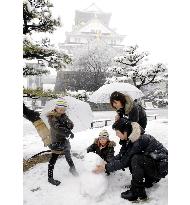
OSAKA, Japan - A couple and their children build a snowman in Osaka Castle Park in Osaka as heavy snowfall hits the Pacific side of Honshu on Feb. 9. Meteorologists are forecasting that 30-50 centimeters of snow could fall through Feb. 10 in heavily affected areas of the southern Tohoku region as the snow front moves from western Japan to the Pacific coast of eastern Japan.

  •  
Heavy snow hits Pacific side of Honshu

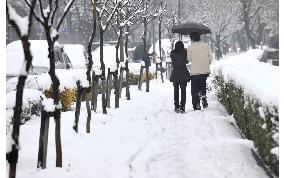
Heavy snow hits Pacific side of Honshu

NAGOYA, Japan - A couple walk in the snow-blanketed streets of Nagoya as heavy snowfall hits the Pacific side of Honshu on Feb. 9. Meteorologists are forecasting that 30-50 centimeters of snow could fall through Feb. 10 in heavily affected areas of the southern Tohoku region as the snow front moves from western Japan to the Pacific coast of eastern Japan.

  •  
Heavy snow hits western Japan

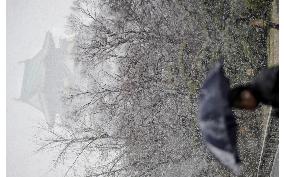
Heavy snow hits western Japan

OSAKA, Japan - Osaka Castle is veiled by heavy snowfall that hit western Japan on the morning of Feb. 9. Meteorologists are forecasting that 30-50 centimeters of snow could fall through Feb. 10 in heavily affected areas of the southern Tohoku region as the snow front moves from western Japan to the Pacific coast of eastern Japan.

  •  
Crocodile captured at hospital parking lot in Nagoya

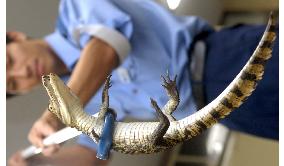
Crocodile captured at hospital parking lot in Nagoya

NAGOYA, Japan - This crocodile measuring 43 centimeters long was captured in a parking lot of a hospital in Nagoya's Chikusa Ward on Aug. 18 evening, police said. The reptile was found by a nurse at around 6:30 p.m. and was caught with a net by security guards of Aichi Prefectural Shiroyama Hospital, and was handed over to police.

  •  
Heavy snow hits parts of central, western Japan

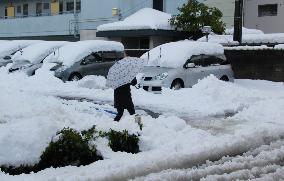
Heavy snow hits parts of central, western Japan

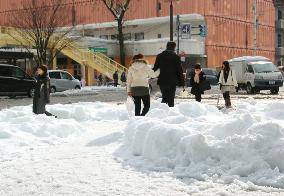
NIIGATA, Japan - Photo taken Dec. 6, 2014, shows an area in the city of Niigata on the Sea of Japan coast where snowfall exceeded 30 centimeters.

  •  
Heavy snow hits parts of central, western Japan

Heavy snow hits parts of central, western Japan

NIIGATA, Japan - Photo taken Dec. 6, 2014, shows an area in the city of Niigata on the Sea of Japan coast where snowfall exceeded 30 centimeters.

  •  
Big cabbages harvested in Hokkaido's Sapporo

Big cabbages harvested in Hokkaido's Sapporo

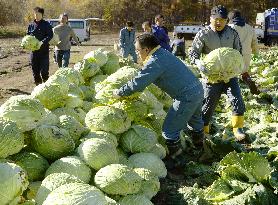
SAPPORO, Japan - People harvest big cabbages, measuring 50-60 centimeters in diameter and weighing 10-15 kilograms, in Sapporo, Hokkaido, Japan's northernmost main island, on Oct. 30, 2014.

  •  
Big cabbages harvested in Hokkaido's Sapporo

Big cabbages harvested in Hokkaido's Sapporo

SAPPORO, Japan - People harvest big cabbages, measuring 50-60 centimeters in diameter and weighing 10-15 kilograms, in Sapporo, Hokkaido, Japan's northernmost main island, on Oct. 30, 2014.

  •  
Tsunami alert after Chile quake

Tsunami alert after Chile quake

HONOLULU, United States - Photo shows Waikiki Beach in Honolulu, Hawaii, around 3:30 a.m. on April 2, 2014, the time when a tsunami was expected to arrive. Waves of about 45 centimeters were spotted there, considered a normal height, according to a local official. Tsunamis of over 50 cm were observed in some areas in Hawaii that day after a magnitude 8.2 quake hit Chile on April 1.

  •  
Tsunami alert after Chile quake

Tsunami alert after Chile quake

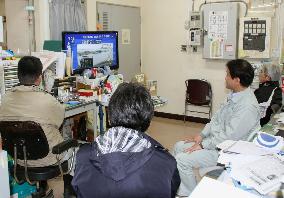
SENDAI, Japan - City officials of Kesennuma in Miyagi Prefecture watch a television broadcast of information about tsunami at an evacuation center past 5:30 a.m. on April 3, 2014. A tsunami of up to 40 centimeters was observed in the early morning that day at a port on the Pacific coast of northeastern Japan's Iwate Prefecture following a magnitude 8.2 quake that hit Chile on April 1, the Japan Meteorological Agency said.

  •  
Mt. Fuji eruption may force 470,000 people to evacuate

Mt. Fuji eruption may force 470,000 people to evacuate

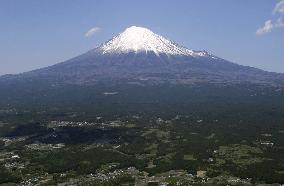
TOKYO, Japan - File photo taken in April 2013 shows Mt. Fuji as seen from around the border of the cities of Fuji and Fujinomiya in Shizuoka Prefecture. A panel set up by Shizuoka and two other prefectures around the 3,776-meter volcano worked out a regional evacuation plan on Feb. 6, 2014, projecting that a violent eruption could force around 470,000 people in the prefectures to evacuate if more than 30 centimeters of ash accumulates on the ground.

  •  
New Year tea ceremony

New Year tea ceremony

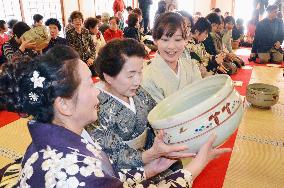
NARA, Japan - Worshipers at Saidai-ji, a temple in Nara, Nara Prefecture, enjoy green tea served in cups with a diameter of 30-40 centimeters and weighing about 5 kilograms, at an annual New Year tea ceremony on Jan. 15, 2014.

  •  
New Year tea ceremony

New Year tea ceremony

NARA, Japan - Worshipers at Saidai-ji, a temple in Nara, Nara Prefecture, enjoy green tea served in cups with a diameter of 30-40 centimeters and weighing about 5 kilograms, at an annual New Year tea ceremony on Jan. 15, 2014.

  •  
Melted nuclear fuel eroded reactor container by up to 65 cm

Melted nuclear fuel eroded reactor container by up to 65 cm

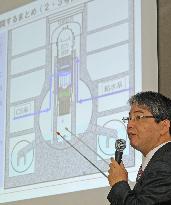
TOKYO, Japan - Junichi Matsumoto, an official of Tokyo Electric Power Co., speaks during a press conference in Tokyo on Nov. 30, 2011. The operator of the crippled Fukushima Daiichi nuclear power plant said that the concrete base of the No. 1 reactor container was eroded by up to 65 centimeters when the fuel inside melted, although the steel container itself was left intact.

  •  
Inedible pure gold soft-serve ice-cream

Inedible pure gold soft-serve ice-cream

TOKYO, Japan - Convenience store operator Ministop Co. said May 11, 2010, it will give away ''soft-serve ice cream'' ornaments made of pure gold by lot to three applicants who send in pictures of themselves with soft-serve ice-cream by May 30. The prized ornament is 10 centimeters tall, 90 grams in weight and worth about 300,000 yen.

  •  
Kid has New Year sip from huge tea bowl

Kid has New Year sip from huge tea bowl

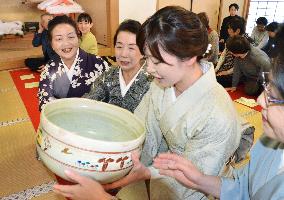
NARA, Japan - A child drinks tea from a huge tea bowl in the year's first traditional ''Ochamori'' tea ceremony at Saidaiji, a Buddhist temple in Nara, western Japan, on Jan. 15, 2010. The bowls, used in the ceremony which dates back more than 750 years, each measure 30 to 40 centimeters in diameter and weigh 5-7 kilograms.

  •  
New Year's tea ceremony with huge bowls at Nara temple

New Year's tea ceremony with huge bowls at Nara temple

NARA, Japan - A woman drinks tea from a huge tea bowl in the year's first traditional ''Ochamori'' tea ceremony at Saidaiji, a Buddhist temple in Nara, western Japan, on Jan. 15, 2010. The bowls, used in the ceremony which dates back more than 750 years, each measure 30 to 40 centimeters in diameter and weigh 5-7 kilograms.

  •  
Panasonic to launch 'tough' laptop PCs

Panasonic to launch 'tough' laptop PCs

OSAKA, Japan - Photo shows a Toughbook high-end laptop personal computer Panasonic Corp. will launch Feb. 13. Panasonic said Jan. 21 it will launch two ''tough'' high-end laptop PCs, Toughbook CF-19 and Toughbook CF-30, that it claims will not break even if they are dropped from a height of 90 centimeters.

  • Main
  • Top
  • Editorial
  • Creative
  • About Us
  • About ILG
  • Terms of use
  • Company
  • BEHIND
  • Price List
  • Single Plan
  • Monthly Plan
  • Services
  • Shooting
  • Rights Clearance
  • Support
  • FAQ
  • How To Buy
  • Contact Us
  • Become a Partner

© KYODO NEWS IMAGES INC

All Rights Reserved.

  • Editorial
  • Olympics
  • News
  • Sports
  • Japan
  • Tech
  • Royal
  • Disaster
  • NorthKorea
  • Old Japan
  • SNS
  • Creative
  • Food
  • Japan
  • Landscape
  • Animal
  • Popular
  • #Ukraine
  • #China
  • #coronavirus
  • #N. Korea
  • #Russia
  • #Thailand
  • #Ukraine
  • #China
  • #coronavirus
  • #N. Korea
  • #Russia
  • #Thailand
  • Food
  • Japan
  • Landscape
  • Animal
  • Olympics
  • News
  • Sports
  • Japan
  • Tech
  • Royal
  • Disaster
  • NorthKorea
  • Old Japan
  • SNS